The Decision to Continue Aeron’s Quest
The Ballad of the Last DragonThe Decision to Continue Aeron’s Quest marks the decisive reversal after Aeron Fowler’s death: the company refuses to let the expedition die with its leader and instead converts his unfinished mission into a posthumous enterprise. Sylvaine Abelan’s proposal is at once a practical plan, a public fiction, an act of loyalty, and a promise to fight the dragon herself. The decision gives Aeron’s absence a purpose, while making the survivors responsible for constructing the heroic ending he can no longer claim in person.
Causes and Background
Sylvaine’s proposal emerges from both attachment and necessity. She has grown fond of the entire company and cannot bear Aeron’s loss, yet she also understands that the remaining members possess the means to continue: the supplies, destination, and funding are already in place. Aeron’s pack still contains his coin purse, and although the survivors have divided the lesser sum taken from the dead mercenaries, they regard Aeron’s money as usable if it advances his mission. The expedition therefore stands at an uneasy threshold between mourning and continuation: abandoning it would waste what Aeron gathered, while proceeding requires the living to decide what his wishes now mean.
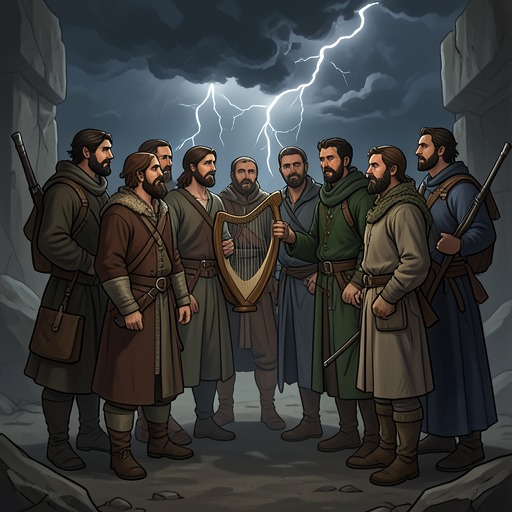
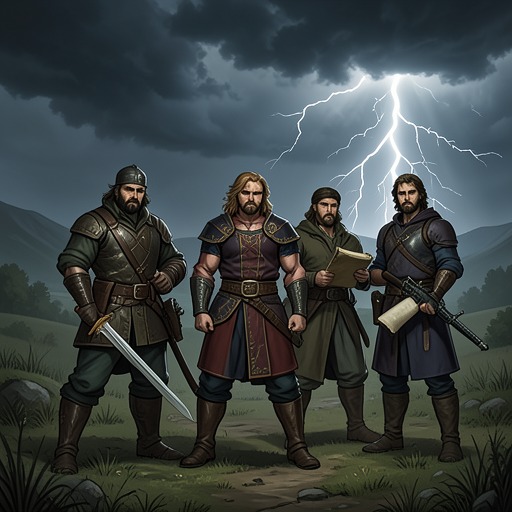
The practical case is inseparable from the company’s particular abilities. Cadoc can provide basic wound care, Neith contributes her blades and her wits, and Jaromir offers fighting skill together with knowledge of the land. Sylvaine’s own instrument and songs provide the means to turn an isolated death into a public story. Her appeal to Jaromir consequently does not rest on sentiment alone; it presents the survivors as a functioning replacement for the fallen leader, each person supplying something the quest still needs.
The Proposal and Its Moral Bargain
Sylvaine addresses Jaromir directly with a proposition: the company will carry on, reach the end of the journey, complete Aeron’s quest, secure payment, and preserve the possibility that Jaromir can still provide for his sister-in-law and nieces. She also promises to bring eternal glory to Aeron’s name, presenting artistic remembrance as the fulfillment of what she identifies as his greatest wish. The plan joins several motives that cannot be cleanly separated. Honor, family obligation, fame, and coin all become reasons to keep moving.
Jaromir initially interprets the scheme as pretending that Aeron remains alive for money. Sylvaine rejects that reduction without denying the financial motive. Her distinction is that the company will honor Aeron after death through glory and coin, rather than merely exploiting his name. The exchange exposes the decision’s ethical instability: the plan depends on fictionalizing Aeron’s continued presence, but Sylvaine frames that fiction as a truthful service to his desires. The company must act on behalf of a dead man while claiming to know what he would have chosen.
Jaromir’s hesitation supplies the decision with its emotional test. He eventually agrees that Aeron would have wanted the group to forge on regardless of fire, brimstone, or torrential flood, and that he would have wanted Neith comfortably cared for for life. His response expands the meaning of the quest beyond the dragon itself. Continuing Aeron’s mission becomes a way to protect the people he valued, not merely a means of collecting a reward. Sylvaine then declares the practical settlement: they will find the dragon, restore Aeron’s honor, spite his brother, and seek riches, even as Jaromir warns that no one should expect to leave wealthy.
The Ballad Campaign and the False Continuation
The most audacious part of the decision is Sylvaine’s method for making a dead adventurer appear to remain active. She will write and sing ballads in Aeron’s name, magnifying his reputation beyond measure. The company will stay at as many inns and taverns as possible, spreading accounts of his exploits and perhaps accepting additional contracts that can also be completed under his name. Because no one knows Aeron’s appearance, the group can invent explanations for his physical absence whenever necessary. The expedition thus becomes a campaign of controlled appearances, with taverns serving as stages and the ballad supplying the absent hero’s voice.
This fiction is designed to produce a political and familial consequence. As Aeron’s name gains traction, the pressure on his brother will increase until he is forced to restore Aeron’s honor. The public story is therefore not simply memorial art; it is leverage. Sylvaine intends to make reputation powerful enough to challenge the dishonor imposed on Aeron while also turning his unfinished journey into evidence of his worth.
The plan culminates in a deliberately manufactured death. At the end of the journey, Aeron will supposedly die bravely while taking the dragon down with him. His real death will be concealed within a more legible heroic narrative, one capable of giving him the welcome home he wanted and the status of a dragon slayer. The company’s future victory will consequently depend on a double construction: they must actually fight the dragon, and they must make the world believe that Aeron was the one who completed the deed.
Collective Consent and Immediate Consequences
The proposal produces stunned silence when Sylvaine explains that the dead Aeron will be presented as the hero of the final confrontation. The silence registers the scale of the deception and the burden of accepting it. Yet the group does not reject her. When Sylvaine asks whether they are truly in accord, Neith answers with an almost imperceptible nod, a small gesture that functions as the first clear confirmation of collective consent. Cadoc and Jaromir continue their argument over Jaromir’s willingness to defend his honor, but their banter occurs within the already accepted plan rather than against it.
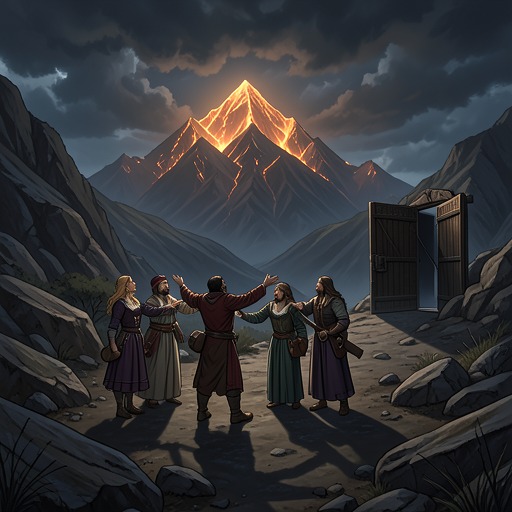
Sylvaine’s decision becomes complete through a personal vow: she will bring Aeron honor and fight his dragon. The wording shifts her position from singer and chronicler to active participant. She is not merely promising to narrate the dragon’s defeat after others accomplish it; she accepts responsibility for entering the quest’s danger herself. The company’s decision therefore changes the surviving expedition’s structure. Aeron remains its public center, but Sylvaine becomes the living agent who must carry both the story and the sword-bearing obligation forward.
Narrative Significance
The decision reverses the expected meaning of death in a quest narrative. Aeron’s death would ordinarily close the mission, depriving it of its leader and leaving the survivors with grief and unfinished obligations. Here, death creates the conditions for a new form of authorship. Aeron can no longer control his reputation, so Sylvaine and the company assume control of it, using performance, repetition, and strategic absence to manufacture a legend whose final shape will be a brave sacrifice.
The event also turns storytelling into action. Sylvaine’s songs are not decorative additions to the expedition; they are instruments for changing public belief, pressuring Aeron’s brother, securing contracts, and protecting the memory of the dead. Her spoken proposal likewise acts as a commitment: once Jaromir and Neith accept it, the company is no longer merely discussing grief but establishing a course of conduct. The value at stake shifts from loss and helplessness toward purpose and shared resolve, although the new purpose remains shadowed by deception and the possibility that the performance will collapse.
Most importantly, The Decision to Continue Aeron’s Quest makes Aeron’s posthumous identity dependent on the living. His honor, his family’s welfare, Neith’s security, and the company’s future all become interwoven with the success of a story that must be performed until it becomes socially powerful. The quest continues not because death has been undone, but because the survivors decide that an unfinished life can still be given an ending—and that the ending may have to be fought for, sung into existence, and attributed to the one who is no longer there.